
Broadband foam RF absorber solutions from 1.0 – 40.0 GHz
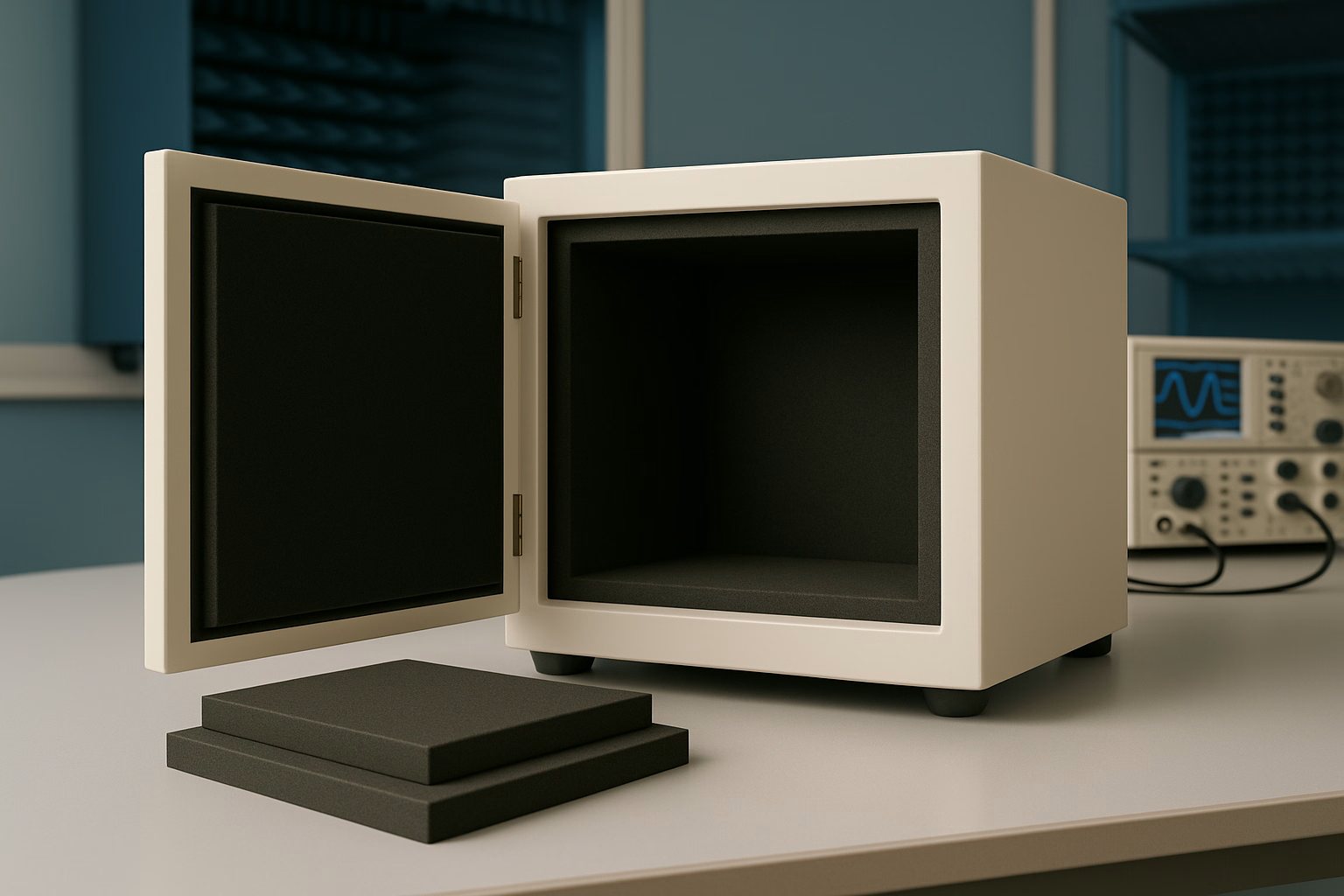
AF Series Overview
Magnetic absorbers and foam absorbers solve different problems. Magnetic elastomer sheets work best when installed directly on or near a noise source inside a shielded cavity, where they convert near-field energy to heat. Foam absorbers, by contrast, are designed for free-space attenuation. Placed in the path of a propagating wave, they absorb energy as the wave passes through the material volume. The AF Series Lossy Foam uses open-cell polyurethane impregnated with carbon-based filler, creating dielectric losses that attenuate RF energy across an extremely broad frequency range from 1.0 to 40.0 GHz.
The AF Series Lossy Foam is most commonly deployed in chamber linings (including DVtest-style automotive EMC chambers), antenna isolation in test environments, free-space attenuation on outdoor test ranges, and any application where two RF sources need to be isolated in open air rather than inside a shielded cavity. Unlike reticulated foam, it does not require a conductive backing. It can be used as a standalone absorber on any surface or in any orientation.
The AF Series Lossy Foam is available in five thicknesses: 0.125″, 0.250″, 0.500″, 1.000″, and 2.000″. Thicker foams extend performance to lower frequencies. Thinner sheets suit higher-frequency applications where wavelengths are shorter and less material depth is needed. Custom shapes and dimensions are available through in-house die-cutting and fabrication.
Key Features
- Broadband performance from 1.0 to 40.0 GHz
- Lightweight and economical polyurethane foam construction
- Easy to cut, shape, or install with pressure-sensitive adhesive (PSA)
- Suitable for large-area lining or cavity absorption
- Low outgassing and RoHS/REACH compliant
Applications
- Shielded test enclosures and chambers
- Free-space or cavity absorption in telecom, satellite, and defense systems
- Antenna pattern shaping or isolation
- Broadband suppression in optical and high-speed digital electronics housings
Common Frequencies
- 1–6 GHz: Wireless communications, cellular infrastructure, base stations
- 6–18 GHz: Satellite payload enclosures, microwave links, electronic housings
- 18–40 GHz: Automotive radar, 5G millimeter-wave, high-frequency backhaul
