US Series Overview
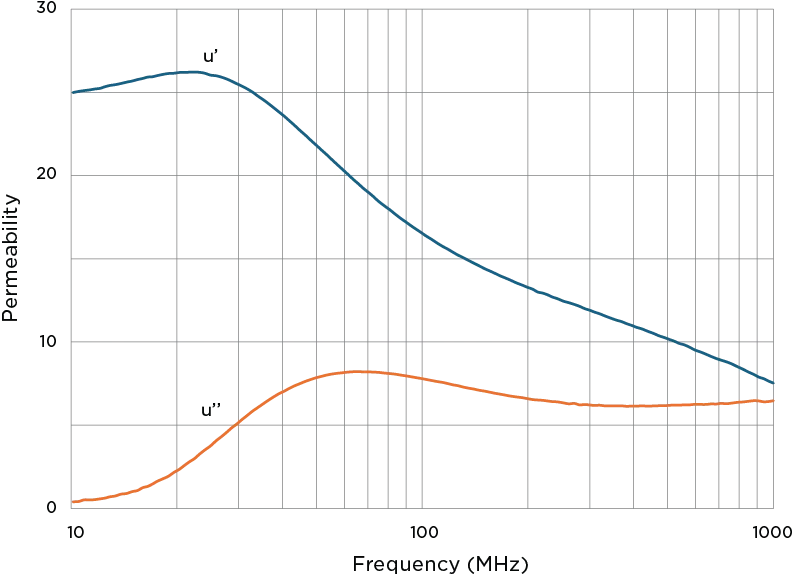
The 0.5 to 3.0 GHz range covers most of the consumer wireless, automotive, and IoT communication bands. Wi-Fi, Bluetooth, cellular LTE, GPS, and the lower 5G FR1 sub-bands all fall in this window. Absorbing energy efficiently across this range is harder than it sounds. Wavelengths between 100 mm and 600 mm mean that most “thin” absorbers don’t have the magnetic mass to interact meaningfully with the field. Engineers often try a sheet sized for higher frequencies, see negligible attenuation, and assume absorbers don’t work. The actual problem is loading level and material selection. The US Series uses a proprietary acrylic elastomer formulation with magnetic particle loading optimized specifically for this band, designed to deliver useful attenuation in thicknesses thin enough to fit inside consumer-electronics enclosures where space is at a premium.
The US Series is commonly deployed in GNSS antenna products for autonomy and positioning applications, connected smart-city infrastructure including parking meter platforms, consumer wireless products (smartphones, laptops, wearables), IoT devices and connected sensors, automotive electronics including infotainment and telematics, and aerospace systems where silicone contamination is a disqualifier. Its non-silicone acrylic base eliminates silicone oil migration concerns, which makes it the default choice for optical, medical, and clean-environment applications where downstream contamination matters as much as RF performance.
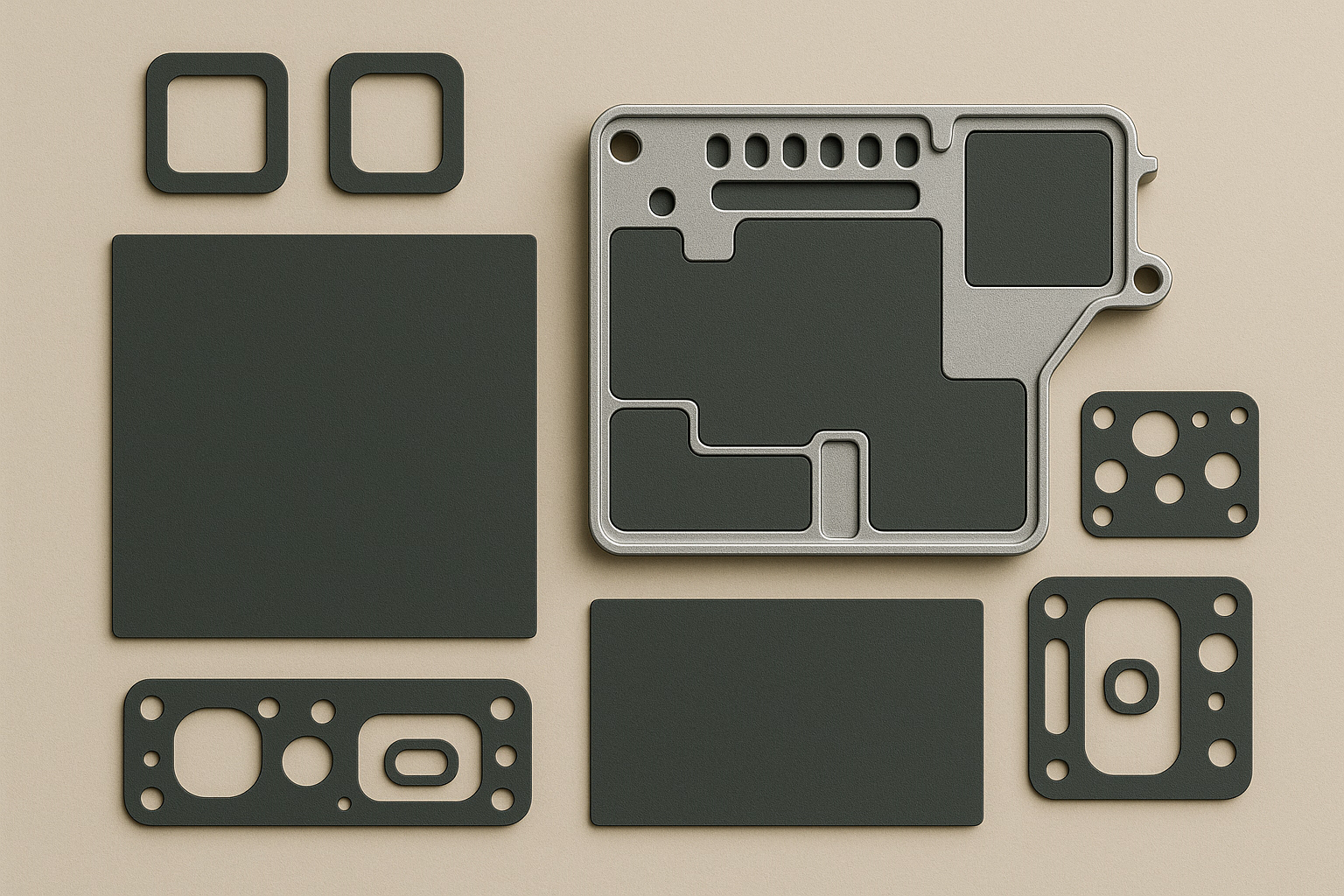
The US Series is available in 0.010″, 0.020″, and 0.040″ standard thicknesses. Most customers start with 0.020″ or 0.040″, with sheets often stacked to extend low-frequency performance. Despite its 0.5 to 3.0 GHz design point, the US Series has been fielded successfully in applications up to 18 GHz, making it a strong starting material when the exact problem frequency hasn’t been characterized yet. Standard PSA backing options and in-house die-cutting allow direct integration into compact assemblies and high-volume production lines.
Electrical Properties